Sunday, January 22, 2012

Lovecraft Gothic: The Shuttered Room

Any fan of Howard Philips Lovecraft knows how difficult it is to translate his novels and short stories of unspeakable cosmic horror into film. The experience of reading Lovecraft is about the writing itself, and while it invokes highly visual imagery, it is not the sort of thing which lends itself well to cinematic adaptation.

1967’s The Shuttered Room comes from a Lovecraft idea completed as a short story after his death by friend and colleague August Derlith. Like many of Lovecraft’s lesser short stories, there isn’t much of a plot. The only things to make the transition from page to film are the setting of the abandoned mill house and the family name. While screenwriters D.B. Ledrov and Nathaniel Tanchuck took the bare bones of the short story and created a boilerplate gothic melodrama, the script and direction managed to get the feel of the cursed Whately clan and the fishing village of Dunwich island.

When Susanna Whately (babelious blond model Carol Lynley) inherits the family property on her twenty-first birthday, she and her husband (the much older Gig Young) Mike Kelton, travel from New York City to secluded Dunwich island somewhere off the coast of New England. Right away the superstitious villagers warn them away from turning the dilapidated old mill into a summer home because Something Evil lurks in the shadows ready to main, torture, and kill.

Speaking of torture, Oliver Reed is on hand as Ethan Whately, Susanna’s cousin and leader of the local gang of island thugs who spends most of the movie stalking Susanna, engaging in dangerous road games with his homies that involve a wooden skid and a barbed wire fence, and getting his ass kicked by Judo expert Mike Kelton. To top things off there is Flora Robson as Aunt Agatha, a sort of granny good witch who observes the pathetic lives of the islanders from atop her Norman tower.

Anyone who saw this movie during repeated showings on American TV in the late sixties and early seventies remembers it as an exciting gothic thrill ride. Seeing it forty years later the denouement is something of a let down, but it still manages to leave the viewer with a sense of poignancy for the wasted life of the thing in the shuttered room. See the second comment here posted by Evie on August 8, 2008 for a thoughtful assessment on how the same story might be presented today.

The Shuttered Room is the kind of film that makes Lovecraft purists throw up their hands in despair, but taken on its own terms it is an effective piece of late 60s British Gothic film making. Heck, there was even a novelization that was marketed to the ravenous Gothic Romance crowd.

Saturday, January 14, 2012

Classic Gothic Romance Cover Artists: Lou Marchetti

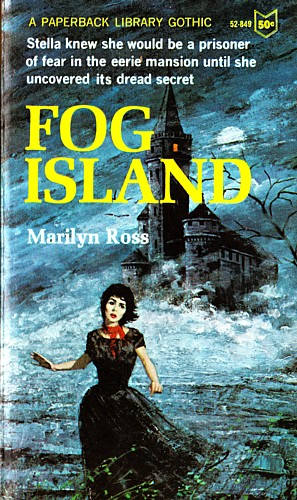
A significant contribution to the runaway success of the paperback Gothic Romance boom of the late 60s and early 70s was the seductively sinister cover illustrations. Unlike the majority of today’s romance novel cover art, paranormal and otherwise, which tends to focus on a peacock alpha male with his shaved chest pumped and oiled to entice the reader to pick him up from the bookstore shelf or download him to her eReader, the Golden Era Gothic Romances emphasized the mystery aspects of the genre’s content. The template showed a frightened heroine desperate to escape a sinister looking house or castle thrust phallus-like against a storm-tossed sky. Whenever a male figure did appear he was but a shadowy figure in the background, his features intentionally obscured by shadows and a billowing black cloak. If this wasn’t enough to make a Gentle Reader’s heart skip a beat as she dug fifty cents out of her purse, what was?


To heighten the sense of threat, the foreboding house often had a narrow sliver of light in a single window like a watchful eye keeping track of the desperately fleeing heroine to make certain she didn’t stray too far from the grounds of the estate. This lighted window, in fact the entire motif of the Gothic Romance cover, was the brainchild of one man, Lou Marchetti.
One of my favorite details on these covers is the fact that the desperate heroine always has time to slip on her travelling gloves before she flees the house of menace.

From the early 1950s through the late 1980s, Marchetti was a prolific cover artist in all genres for the leading paperback publishers of the era including Avon, Ballantine, Pocket Books, Dell Warner, Lancer, Popular Library and Fawcett Publishing.

Scans of Marchetti’s Gothic Romance cover illustrations are plentiful and easy to find on the internet, but unlike other Gothic Romance cover artists, Marchetti’s legacy is kept alive by his daughter Louise Marchetti Zeitlin on the website Loumarchetti.com featuring original cover art (sans titles and lettering) of both Gothic Romance as well as his equally outstanding work for pulp fiction genres such as crime, noir, and juvenile delinquent titles. More cover artwork can also be viewed on the Lou Marchetti Facebook page.

Sunday, January 8, 2012

Daniel Haller's Lovecraft Trilogy


Why should Roger Corman get all the credit? A great deal of the success and continued popularity of Corman’s Poe adaptations are the art direction and stunning sets that Daniel Haller created on a shoestring budget. After studying at the Chouinard Art Institute in Los Angeles, Haller cut his teeth on low-budget American International exploitation pictures, most notably a slew of films featuring mobsters, hot rods, and juvenile delinquents. After directing a handful of feature films for American International, he enjoyed a long career as a director of such 1970s television staples such as The Mod Squad, Ironside, and Kojak. But it is his magnificent eye for Gothic detail which keeps his name alive among fans of classic horror films.


Haller’s first foray into the Lovecraft pantheon was his work on Corman’s The Haunted Palace, an unofficial entry in AI’s Poe cycle but owing nothing more than the title to Poe. The story is a fairly faithful adaptation of H.P. Lovecraft’s novel The Case of Charles Dexter Ward. The Haunted Palace was one of Haller’s last efforts as Art Director, and once again he was able to suggest a Gothic grandeur and opulence in the cavernous interiors he designed for the film.

Two years later Haller made his directorial debut with Die, Monster, Die, (1965) loosely based on Lovecraft’s The Colour Out of Space. An uneven film, Die, Monster, Die has its moments, with smoke machine fog billowing in front of exterior shots of Berkshire’s Oakley Court, Freda Jackson’s disfigured face hidden behind gossamer bed curtains, and a particularly strange visit to Corbin Witley’s greenhouse. Die, Monster, Die suffers by moving the story location to England, as well as a weak script that bears little resemblance to the source material
Stephen Reinhart (Nick Adams) peruses the Necronomicon.
This can't be good.

Haller fared much better with his final Lovecraft film, 1970’s masterpiece of quasi-satanic schlock, The Dunwich Horror. Lovecraft purists may argue that the story (scripted by future Academy Award winner Curtis Hansen for his adaptation of James Elroy’s complex novel L.A. Confidential) strayed too far afield. What critics often overlook is The Dunwich Horror’s faithfulness to the mythos that Lovecraft created. As always, American International aimed the production squarely at the teen market, filling the screen with psychedelic imagery and cashing in on the late 60s craze for devil worship and the sacrifice of nubile young maidens. Thanks to another great score by Les Baxter, an over-the-top performance from Dean Stockwell, and much livelier direction from Haller, The Dunwich Horror remains a cult favorite among fans of 60s low budget horror features.
The Altar to Yog-Sothoth on Sentinel Hill.

Sadly, Haller has never returned to Art Direction, and with the exception of directing one entry in Rod Serling’s Night Gallery series, never ventured into the horror field again. The Haunted Palace, Die, Monster, Die, and The Dunwich Horror are three vastly different types of movies with varying degrees of success, but until a major league director such as Guillermo del Toro finally comes through with his proposed adaptation of At the Mountains of Madness, Haller’s Lovecraft Trilogy remains some of the best Lovecraft films we have. 
Dean Stockwell as Wilbur Whately invokes Yog-Sothoth.

Sunday, January 1, 2012

2012: Year of the Gothic

And it’s long overdue. There has been a renaissance among traditional horror creatures the past few years. Vampires, even the sparkly ones, are all over cinemas with that wretched teen romance series that shall not be named (call it Gothic Ultra Lite) and television with HBO’s deliriously hyper sexual True Blood; the zombie invasion continues unabated with the wildly popular AMC series The Walking Dead leading the pack; and 2010 saw Universal’s flawed but valiant effort at re-imagining The Wolfman as a lean, mean killing machine.

The first half of 2012 will see a trio of Gothic tinged releases from major studios, hopefully reviving the Gothic tradition at the movies for awhile so we may be seeing more lonely isolated houses, midnight rides through misty graveyards, and dysfunctional, agoraphobic families with enough skeletons in the closet to put Dynasty and Dallas to shame.

First up is the UK’s Hammer Films long awaited big screen adaptation of Susan Hill’s classic ghost story The Woman in Black. Yes, that Hammer Films. A stage production of The Woman in Black has been terrifying London audiences for more than twenty years. Hammer’s version offers Daniel Radcliffe his first adult leading film role which should bring the Potterheads out in droves. Watch for it in US theaters on February 3rd.


March 9th brings us John Cusak as Edgar Allan Poe in the action packed detective mystery The Raven, wherein the killer recreates scenes from Poe’s classic stories. Overall, this film may stretch the borders of Gothic a bit, but judging from the production design evident in the trailer, the Gothic eye candy appears to be in visual overdrive.


Dark Shadows fans are chomping at the bit to catch the first glimpses of Johnny Depp as Barnabas Collins in Tim Burton’s version of the cult classic 1960s TV series, but the studio isn’t teasing with a trailer anytime soon. Fan boards have recently pointed out that Tim Burton’s Alice in Wonderland didn’t offer a trailer until close to that film’s release. In that case, we may not see anything until a few weeks prior to the Tim Burton’s Dark Shadows still confirmed May 11th release. Until then we have to make due with this ensemble photo taken on the first day of shooting last spring.


As we all know, Hollywood has a hard time coming up with anything new, so I’m anticipating a slew of imitators to begin arriving during the second half of 2012, but for the sake of originality, might I suggest an adaptation of Diane Setterfield’s intriguing 2006 Gothic pastiche, The Thirteenth Tale?

Here’s to a very Gothic 2012!

Monday, December 26, 2011

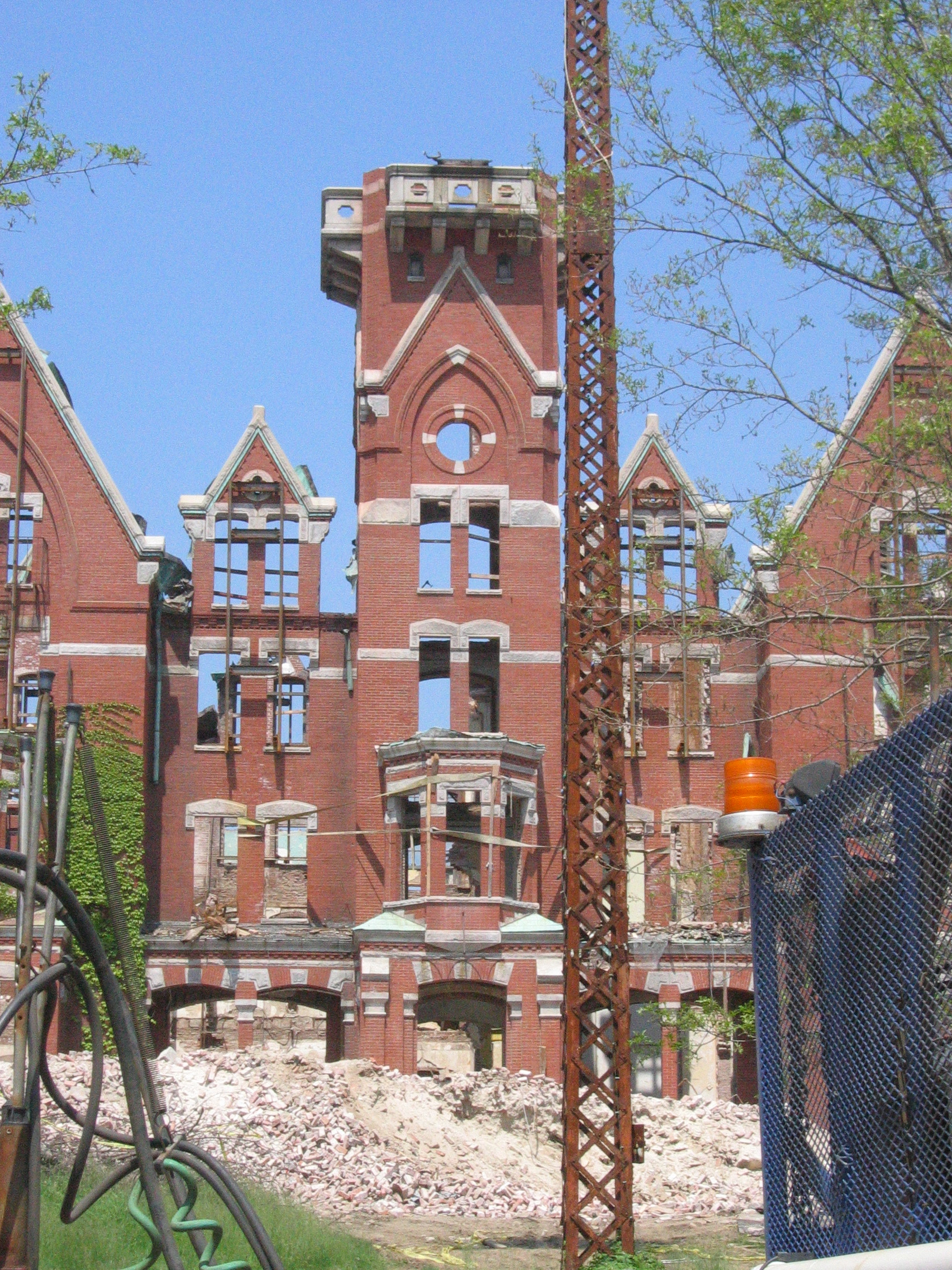
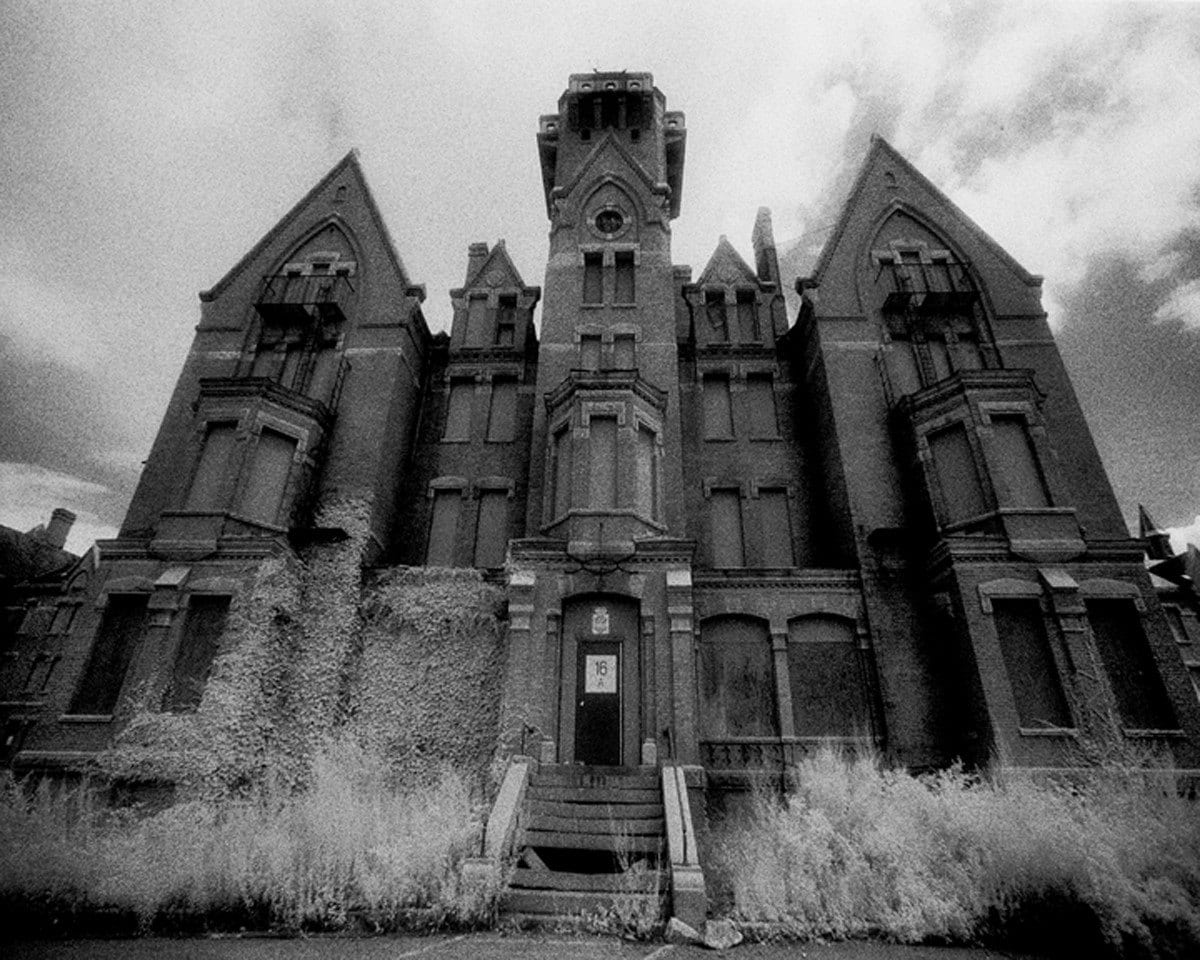
In Memoriam: Danvers State Mental Hospital 1878-2006

One of the key elements of Gothic fiction is the Old Dark House. From Shirley Jackson’s Hill House to Stephen King’s Overlook Hotel, these places have fascinated and frightened us for years. Such places always seem to possess a life of their own, the Genius Loci – or protective spirit of a place - of the classic Romans, but in the hands of Gothic writers this spirit always takes on the guise of something malignant and malevolent. Authors and readers return to these stories of diseased houses over and over, but they don’t really exist. Or do they?

When I was a boy growing up in Cincinnati, Ohio in the late 1960s, we had our own still functioning mental hospital known as Longview. It was a source of fascination and fear for grade schoolers, this gothic aberration briefly glimpsed behind ivy covered walls, accompanied by rumors that so-and-so’s mother was incarcerated there, and veiled threats that you yourself were just crazy enough to one day be committed.


In the late 19th Century these asylums for the insane sprouted like weeds from coast to coast. Perhaps the grandmother of them all, the Danvers State Mental Hospital some seventeen miles outside of Boston, Massachusetts, remains the quintessential American mad house, loony bin, booby hatch, insane asylum.


It was here that torturous therapies for the mentally ill were developed and perfected until these atrocities were being carried out en masse at state hospitals around the country: straitjackets, hydrotherapy baths, shock treatment, and what would become the standard operating procedure and magic cure-all for any number of psychiatric disorders, the prefrontal lobotomy. If this isn’t the stuff of Gothic nightmares, what is?


Built to accommodate approximately 500 patients, by the late 1930s and early 1940s the population increased to nearly 2,000, with rooms overcrowded and patients crammed into basements and attics. As more humane treatments were developed in the 1960s and with the onset of deinstitutionalization in the 1970s, the population at Danvers rapidly declined until it was eventually abandoned altogether and left to rot in the decay of memories of its own atrocities. It was demolished in 2006.


In 2001, Ms. Danvers starred as the centerpiece of the masterful psychological horror film Session 9, to this day one of most truly creepy Gothic horror films I have ever seen. If you haven’t seen it and are reading this blog, get thee to thy nearest video rental service and watch it tonight. In the dark.


No writer of fiction could possibly have crafted the abominations that took place within the walls of Danvers and other state mental hospitals like it, but their legacy lives on providing fertile inspiration to those of us who delve into the dark recesses of the human mind.


Silence lay steadily against the wood and stone of Hill House, 
and whatever walked there, walked alone.
Shirley Jackson

Tuesday, December 20, 2011

An Appreciation of Barbara Michaels Part II – Prince of Darkness

Black Masses, pacts with the devil,” proclaims the hero in Prince of Darkness, Barbara Michaels’ second foray into the occult, “that’s the thing nowadays.

And how right he was. First published in 1969, Prince of Darkness came out as America’s love affair with the Occult reached its zenith, fueled in part by the runaway success of Ira Levin’s novel and Roman Polanski’s brilliant film adaptation of Rosemary’s Baby, as well as a burgeoning use of Tarot cards and renewed interest in Astrology, and ultimately, dabbling in magic, both white and black.

I admit I have a weakness for these kind of books, what I call quasi-satanic hooey, for as much as Michaels tries to lend authenticity to her tale of witchcraft in the idyllic countryside surrounding suburban Washington D.C. by name dropping Margaret Murray’s pioneering witch-cult theory, she still manages to confuse black magic with white. For someone with my tastes, it makes the cheese factor all the more delectable. Thanks to Michaels' consummate storytelling skills, Prince of Darkness never veers into the downright silliness of something like Fred Mustard Stewarts’s The Mephisto Waltz or Peter Lorraine’s nearly incomprehensible plot of Day of the Arrow.


I’d be curious to learn if Michaels one and only novel of contemporary witchcraft was her own idea or the suggestion of an agent who, like everyone else in the entertainment industry, saw dollar signs when the devil reared his horned head.

As in Ammie, Come Home, Michaels once again attempts to subvert the Gothic Romance genre, this time making the shady male lead into the vulnerable hero. Part of my perennial fascination with Prince of Darkness is its deliberately oblique plot. The opening prologue reads like a set-up for a low key spy novel, and then more than half the book follows our hero’s antics as he stages some elaborate apparitions and hauntings in an attempt to drive the already fragile minded heroine further insane. What our hero doesn’t count on is his efforts being trumped every step of the way by any number of nefarious characters ambling about quaint Middleburg, Maryland. He also doesn’t count on falling in love with the heroine herself (especially as he has already been panting like a dog in heat after the heroine’s little honey of a niece.) But male readers shouldn’t be put off by this mild romantic diversion. As in many of Barbara Michaels’ books the romance takes a back seat to the suspense, the ghosts, the chills and thrills, and in this case, the unmasking of a certain character during the book’s climax which finally makes sense of the novel’s overly long set up.

Prince of Darkness is not regarded as a favorite even among the most die-hard Barbara Michaels fans, but it manages to be, like so many other fictional forays into the occult during the final days of the 1960s prior to William Peter Blatty unleashing The Exorcist on an unsuspecting world, a fascinating time capsule of a specific time and attitude in America.


Harry Bennett's voyeuristic cover for the 1970 Fawcett Crest paperback edition.

Sunday, December 11, 2011

Susan Hill's Gothic Masterpiece: The Woman in Black

Every now and then you see a movie or read a book that so disturbs you that its ideas and images are burned into your brain for hours, if not days, afterwards. For me, this is often accompanied by a feeling of helplessness, not certain what to do next to exorcise the disturbance from my psyche. The film version of Daphne Du Maurier’s Don’t Look Now comes to mind.

Susan Hill’s 1983 novel The Woman in Black is just such a book. I finished reading it on a cold December afternoon while the light outside my window faded and a chill from the window fingered the back of my neck. And then I stood up, paced a bit, and put on every light in the house.

The Woman in Black is a straightforward ghost story whose power lies in its simplicity. A young solicitor travels to the most desolate corner of England imaginable, to Eel Marsh House to clear the estate of the recently deceased Mrs. Drablow. Spending several nights alone in the house, Arthur Kipps is subjected to any number of manifestations, most notably the appearance of the titular woman dressed in black. Like all good ghost stories, the mystery hangs on some tragic occurrence in the not so distant past, and fans of the genre can mostly piece together this particular puzzle, but it is what happens after the denouement which will raise the shackles on even the most jaded reader of Gothic thrillers.

The Woman in Black is a short 164 pages in a newly reprinted American trade paperback edition, something that can be devoured in one or two sittings. This is one you won’t want to put down. After an awkward opening chapter, The Woman in Black kicks into high gear, offering little respite from the all encompassing dread that follows. Hill has a fine command of the language which keeps the heavy Gothic atmosphere from spilling over into parody, for atmosphere it has, in spades:

Then from somewhere, out of that howling darkness, a cry came to my ears, catapulting me back into the present and banishing all tranquility.

I listened hard. Nothing. The tumult of the wind, like a banshee, and the banging and rattling of the window in its old, ill-fitting frame. Then yes, again, a cry, that familiar cry of desperation and anguish, a cry for help from a child somewhere out on the marsh.

Do yourself a favor. Put down that bloated Anne Rice novel and read possibly the finest novel of Gothic horror since Shirley Jackson’s The Haunting of Hill House. And don’t forget to leave some extra lights on.